




Grasse and Niche Perfume, Answered
What Grasse means on a label, what makes a fragrance niche, and how to layer like a perfumer — answered by Alex Gimenez, founder of Studio Ready, trained at the Grasse Institute of Perfumery.
What is Grasse?
A town in Provence, in the south of France, regarded since the sixteenth century as the historic capital of perfumery. Its fields — jasmine, rose, tuberose — and its concentration of perfumers made it the center of the fragrance world; UNESCO inscribed the region's perfume heritage on its cultural heritage list in 2018. When a house names Grasse, it is naming the most storied source in perfumery.
Why does "perfume oil from Grasse" matter?
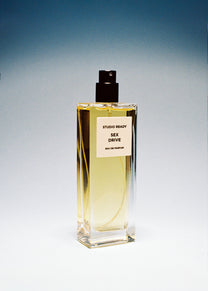
The perfume oil is the fragrance — everything else in the bottle carries it. Oil composed in Grasse draws on the region's centuries of extraction and blending craft. Studio Ready's perfume oil comes from Grasse, where our founder trained in perfumery; it is blended with the highest quality natural ingredients, and our products are made in the USA with globally sourced ingredients and components.
What is a niche fragrance?
A fragrance made by an independent house for a specific sensibility, rather than by a fashion conglomerate for the widest possible audience. Niche houses take positions a mass brand cannot: limited production, unusual materials, a defined point of view. Studio Ready's position, held since 2017, is aphrodisiac fragrance — compositions built on natural aphrodisiacs that amplify your chemistry rather than perfume over it.
Is niche fragrance worth the price?
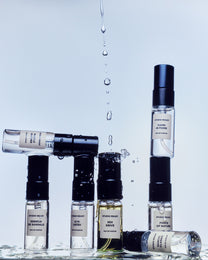
You are paying for concentration and intent: eau de parfum strength, distinctive materials, and a composition that does not smell like everyone else's. The economical way to decide is a discovery set — seven pocket-sized Eaux de Parfum whose full value may be redeemed against any full-size bottle within thirty days.
How should I layer fragrances?
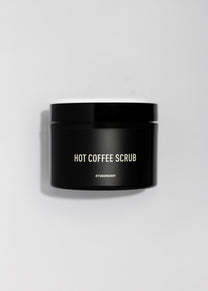
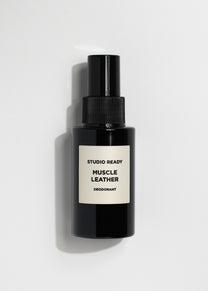
Two ways. Within a scent family: exfoliate so the fragrance lands clean, anchor it with the matching Body Oil on the warm regions of the body, apply the Eau de Parfum to the neck and wrists, and conclude with the Deodorant — each layer extends and amplifies the aroma. Between fragrances: wear each alone first, then layer two that share a note in common — a shared base of Sandalwood or musk lets two compositions meld instead of compete.
How many sprays when layering?
Fewer of each than you would wear alone — two of the first, one or two of the second. Layering multiplies presence; it should still be discovered at close range.
What is sandalwood's Mysore tradition?
Mysore, in India, produced the sandalwood against which all sandalwood is measured — creamy, dense, enduring. Studio Ready's Indonesian sandalwood is cultivated in harmony with the Mysore tradition: the same way, the same conditions, the legendary profile. It anchors Esencia de Sandalo and the Santal family.